
Policy update
Delhi Solar Subsidy 2026: The Complete ₹78,000 Guide
Delhi solar subsidy 2026 explained: ₹78,000 Delhi subsidy, ₹78,000 PM Surya Ghar and a ₹19,000 top-up. Slab-wise tables, eligibility and how to apply.
Read the guide →
The headline from the Delhi Government's 1 September 2026 announcement was striking: free rooftop solar for every household using up to 400 units a month. That sounds like there must be a catch. This guide checks exactly that.
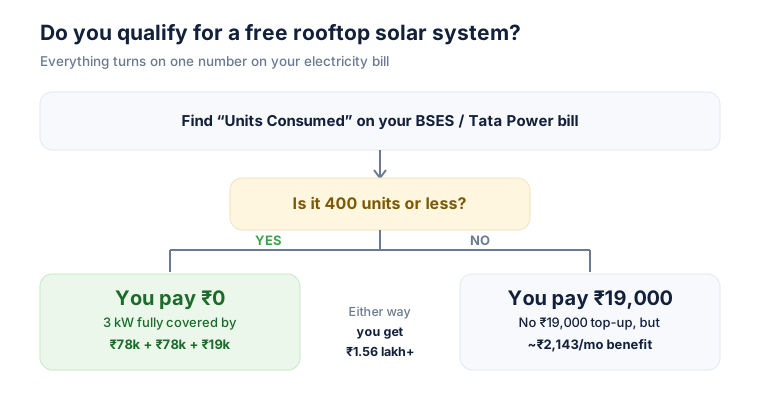
The government is not handing you cash — it is paying for the system. The arithmetic:
| Component | 2 kW system | 3 kW system |
|---|---|---|
| Listed system cost | ₹1,30,000 | ₹1,75,000 |
| Central subsidy (PM Surya Ghar) | − ₹60,000 | − ₹78,000 |
| Delhi Government subsidy | − ₹52,000 | − ₹78,000 |
| Delhi top-up (400 units or less) | − ₹18,000 | − ₹19,000 |
| You pay | ₹0 | ₹0 |
At both sizes the total support exactly matches the system cost. That is the whole basis of the word “free”.
You need one number: monthly units consumed.
Can't find the units? A rough estimate: bill amount ÷ ₹7 ≈ units. A ₹2,500 bill is roughly 350 units. Use the bill figure for anything that matters.
Got your number? Put it into the calculator to see your exact subsidy →
| 400 units or less | Over 400 units | |
|---|---|---|
| Delhi top-up | Yes (₹19,000) | No |
| Your cost on 3 kW | ₹0 | ₹19,000 |
| Est. monthly benefit | ~₹950 – ₹1,659 | ~₹2,143 |
| Surplus export rate | Adjusted through net metering | ₹6.50 per unit |
| Payback | Immediate (no investment) | ~9 months |
An important point: crossing 400 units does not make this a bad deal. You pay ₹19,000 and get roughly ₹2,143 a month back — recovered in about nine months, followed by 24 years of effectively free electricity. That is a better return than any fixed deposit available in Delhi.
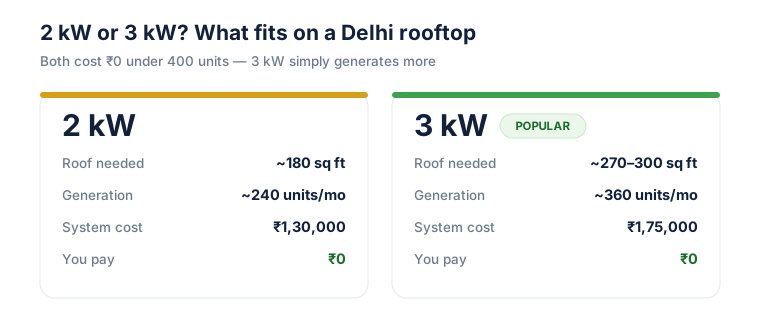
If the roof allows it, 3 kW is the smarter choice — the cost to you is ₹0 either way, but a 3 kW system generates about 50% more and earns from exported surplus.
Honestly, keep these in mind:
All ticked? You qualify.
Delhi's target is 2.3 lakh households by March 2027, and only about 10,000 buildings in the city currently have rooftop solar — most of them government buildings. Demand is still low and approvals are quick. As applications pile up, the net meter and inspection queues will lengthen.
The simplest first step: find your bill, check the units, and get a free rooftop survey so you know how many kilowatts your roof can actually take.
Delhi solar subsidy 2026 explained: ₹78,000 Delhi subsidy, ₹78,000 PM Surya Ghar and a ₹19,000 top-up. Slab-wise tables, eligibility and how to apply.
The official Delhi Solar Portal rule: choosing a PM Surya Ghar empanelled vendor is not mandatory. Delhi subsidy and GBI apply to all net meter installations.
3 kW solar panel price in Delhi 2026: ₹1.75 lakh listed cost, ₹0 to ₹19,000 after subsidy. Monthly generation, savings by slab and a 25-year calculation.
How to apply for solar subsidy in Delhi: PM Surya Ghar registration, Delhi Solar Portal application, document checklist, net metering and realistic timelines.
Keep your electricity bill handy and call us — in five minutes we'll tell you your subsidy, what you'd pay and what you'd save.